



 Appearing in your home on "Knights of Prosperity." Yes, on free, network television. Ain't America grand?


 Appearing in your home on "Knights of Prosperity." Yes, on free, network television. Ain't America grand?
 My Saturday afternoon training session featured a quick comment that held loads of implications.
 As many of you know, Royal Robbins 5.11 Tactical Pants have dominated the market for "concealment" or "low visibility" tactical wear for several years now. They provide a very practical alternative to solid color, miltary style BDU trousers, wear well, and have an assortment of useful features. Interestingly, they really did not enhance the features that appeared on their ancestor garment, the Royal Robbins climbing pants that appeared in the early Nineties. Even the 5.11 Gear name is a nod to the original purpose of the pants, which were for outdoorsman trekking to their favorite rock-climbing spot. The 5.11 pants are now pretty standard issue to a veritable who's who of federal, state and local agencies.
 Put your hands in the air if you've heard of Konigun Ninjutsu. Anyone?
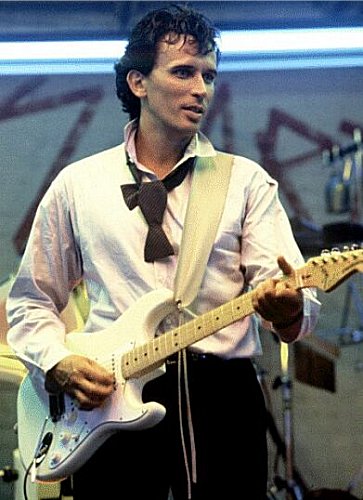 Calling all Blue Blaze Irregulars! Instant newsflash...
 What do you expect from the man who played RoboCop? While Peter Weller is a cult favorite on the Sci Fi Convention circuit, it's not like he ever made a big, important movie.
 He's solidly in the B-list of well-made cult films.

 Usually when I post pictures of elderly Japanese men, they are highly skilled martial artists desperately trying to maintain a tradition of ass-whupping that goes back hundreds of years. Not today.
 Path of the Assassin is Koike and Kojima's 15-volume story of notorious ninja master, Hattori Hanzo! Published by dark Horse comics, you can follow the "quasi-historical" (i.e. fictional)advantures of Hanzo through this series. Koike and Kojima are best known for their hugely influential series, Lone Wolf and Cub and they have an excellent understanding of the Japanese past.
 And speaking of the true stuff... I had an opportunity to teach a section of the dojo's End of Year Training. I took about fifteen minutes to express, and demonstrate, what I learned this year: that Basics really matter.
 This is Tun Tavern. On November 10, 1775, the Continental Congress commissioned Samuel Nicholas to raise two Battalions of Marines. That very day, Nicholas set up shop in Tun Tavern. He appointed Robert Mullan, then the proprietor of the tavern, to the job of chief Marine Recruiter -- serving, of course, from his place of business at Tun Tavern. Prospective recruits flocked to the tavern, lured by (1) cold beer and (2) the opportunity to serve in the new Corps of Marines. So, yes, the U.S. Marine Corps was indeed born in Tun Tavern. Needless to say, both the Marine Corps and the tavern thrived during this new relationship.
 Over my Christmas Vacation, my father and I went to visit the new museum. He had provided a donation for the place, and wanted to chack on his "investment." My father was not a Marine, he was a draftee in the Army. But when he heard there was an effort to build a museum, he felt strongly that he should provide some money to assist in the construction.
 The museum is world-class. It covers the full expanse of Marine Corps history, but focuses on the modern age: World War II, Korea, Vietnam, and the Cold War Era. This was obviously done to appease the many, many vets (always known as "Former Marines," never "Ex-Marines") who provided money so the deeds of their comrades would not be forgotten. The staff is rife with Former Marines, all ready to answer questions knowledgably and eagerly. There are plans to expand the museum to have exhibit halls devoted to the earlier periods, and more than one staff member told me they have more artifacts than they can ever hope to display.
 The place is very moving, and does not shy away from the Marines' core mission: find the enemy and destroy him. This is not an dry, antiseptic view of history. There is a life size display of a World War I Marine struggling in hand-to-hand combat with a German stormtrooper -- it's all mud, muck, knives, and pistols. As the visitor enters the World War II gallery, the visitor is greeted with another lifesize diorama of a Navy Corpsman treating a wounded Marine.
 My favorite room was a depiction of a Vietnam firebase -- most likely Khe Sanh. The entrance, as you can see in the conceptual drawing above, is through a mock-up of a Chinook helicopter's tail. The Chinook fuselage vibrates, and a hot, dry wind blows through the main compartment. You can hear radio chatter over some speakers. I closed my eyes for a moment and thought of a high school classmate who recently returned from reserve duty as a Marine in Iraq. One of his stories involved a raid from the back of a Chinook, and it occurred to me that it must have been just like this... Except for the stark fear and adrenaline dump, of course!
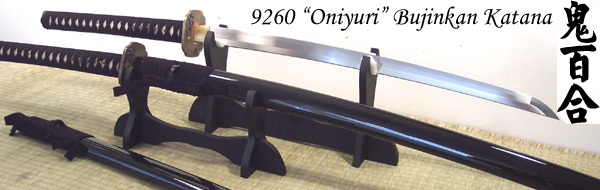
 Last Saturday, our dojo's Fearless Leader (FL) invited his teacher, the awe-inspiring "He Who Shall Not be Named!" (or HWSNBN!) to give a seminar on sparring. As usual, HWSNBN! gave an excellent class and threw out many comments for us Mere Mortals to consider when we slink back to regular training to work on improving.
 I was thinking about one of the rhetorical questions thrown out by HWSNBN! "Why are you in Ichimonji?" He said any response of "I don't know why I'm doing this" is incorrect. I liked that.
I've also heard, in an ominously vague way, that some students, "Didn't seem to have a grasp of Gyokko Ryu Ichimonji." Comments like that cause me to ponder on my own training and lead to the first few paragraphs above.
Here's a training tip: Always assume that a criticism of your group automatically applies to you. Think long and hard about it. Never, ever, hear yourself say, "I'm glad he's not talking about me." He probably is talking about you in that case.
Gambatte!


