Friday, October 12, 2007

The Sweetness Continues...

Hey! Isn't that Jason Chambers and Bill Duff, hosts of the Human Weapon? And are they wearing black keikogi? No way! And... Isn't that the Bujinkan Hombu Dojo they're standing in?

It is the Bujinkan Hombu dojo!

The Human Weapon does Ninjutsu. It's not listed yet on the website, so this must be for a second season. Oh, the pain of waiting!

In the meantime, you can stock up on previous episodes...

Goin' Down Under


Australia's contribution to our war effort! Thanks, friends!


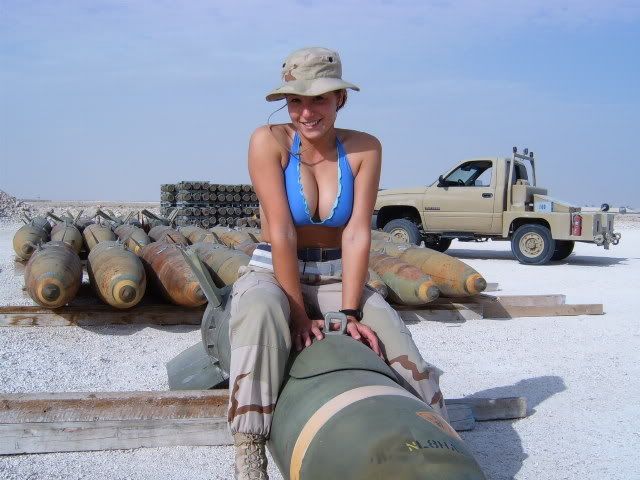
Big Bombs...


C'mon... Did you expect poetry?


The video that may have killed Queen in America...

View it here.

Sky Ninja loves this video, but he'd also like you to see this one and this one.

There can be only one...

Mil Spec Monkey

The guy doing the product review here has the world's greatest t-shirt...

...and the rest of his semi-useless stuff collection in the background is pretty cool too.

See, I'm not alone in my mania!

Megaforce Patch

The Official Megaforce Patch.

Warrior Art

I've recently dropped a term on the blog that has apparently rankled some individuals: "Warrior Art."

I spent enough time in management to know that in instances of miscommunication, it is best to first assume the speaker did not adequately express his point, and explain it again. If the problem persists, chances are good the issue is with the listener...

So what do I mean by "warrior art?"

Martial arts rarely have neat, tidy histories, But broadly, it could be said that some martial arts aren't truly "martial." Most Okinawan karate styles were passed by peasant familes until systemized in the late 19th and early 20th Centuries. Shoalin Kung Fu was developed by monks for exercise and self-defense. Neither of these instances were specifically intended for use on the battlefield by professional warriors.

Jujutsu (the Japanese original), on the other hand, was developed by the samurai specifically for use against armed and armored opponents. Judo was originally a modernized synthesis of classical jujutsu styles, meaning it was combat effective. By the 1960's, however, the rules had changed and mutating into a sport-oriented system.

This doesn't mean that someone with a bad attitude and mad wrestling skills couldn't ruin your day with his collegiate wrestling technique. It doesn't mean a Shoalin monk wasn't a threat on a battlefield back in the day. It does mean that each art has a set of assumptions that inform it's strategy. These are inherent prejudices that are passed along and affect a practitioner's outlook.

A collegiate wrestler probably has all the skill to disarm a gun-wielding attacker. But has he been trained to do so? probably not. Nor has he been trained to deal with multiple opponents. Even against one opponent, his training has instilled in him that winning is pinning the other guy on his back. This isn't an indictment of the wrestler's skill, it is simply the result of the context in which he has trained.

So when I say we practice a "warrior art," I mean to remind my fellow students that our context is battlefield combat. Anything goes. The stakes are high. Survival is our only goal. Lives are at risk.

Too often, our modern training is colored by action movie fantasies. We bring the notions of sportsmanship and fair play from other athletics into the dojo. We crosstrain in techniques and tactics from other systems. And we sometimes grow so engaged in cooperative training with our friends that we can easily forget the high stakes our training is suppossed to prepare us to meet.

Of course, we aren't meant to kill each other inside the dojo. We'd have very short careers that way. Besides, Sensei says, "Understand? Good. Play!" I'm saying that part of our mind must be focused on the ultimate nature of our martial art: Combat. Otherwise, what we do degenerates into sport at best, dance at worst.

There is another side to this coin. It is a warrior "ART", not a warrior slugfest.

Art means that our practice should manifest more than bonebreaking and manhandling. There is a higher aspect to it all. On the physical side, our practiced tehniques should have some beauty to them. While we might be forced to resort to sweeping, clubbing blows and raw aggression in a real fight, even these will more effective if we have instilled some scientific efficiency into our muscle memory with quality training effort. Training is meant to overcome instinct, so maybe we can present a smidgen more technique than caveman clobbering if we train hard. And technique means we should be able to dish out a little more punishment in each blow than we otherwise could.

Our actions also have a moral and ethical consequence which we need to consider. Historical warriors in many societies adhered to a code of honor and conduct. (Ok, in practice, many of them ignored the niceties, but that's a topic for another day.) Mastering the skills of destruction carried with it the responsibility to use them wisely. The study of these aspects is also important to truly learning a warrior art.

Is there a tension here between the brutality of learning to crush our opponent, and the higher aspects of art? Yes, deal with it. Does it require a little extra brainpower to understand? Yes. Is it easy to decide all we need to do is learn how to break people? Yes; ignoring the tension is risky. It's also easy to go all new-age and learn martial-arts-for-peace and ignore any kind of practicality. That's just as wrong.

A final, brief word: There is a difference between a traditional warrior art, such as ours, and a modern combat warrior art, such as Krav Maga, MCMAP, or any of the "Reality Based" systems. The difference begins with the technological innovation of repeating firearms, and every weapons innovation to the modern day. There is no family in the Bujinkan that can teach you specifically how to disarm a suicide belt bomber. But the key word is "specifically." If you intend to step onto a modern battlefield, you'll need to supplement your training.

But that's okay... Most of us do.


Endorsed by Tony Soprano: Sarah Shahi


Wednesday, October 03, 2007

Even more Megaforce Video...

It's just insane how much Megaforce video has been released lately... You'd think secrecy would be their watchword.

FLASH! A-ah!


I don't know why, but I just can't get this out of my mind...


Here's the original.


So sweet, it's practically Megaforce...

Sunday, September 30, 2007

More Seminar notes

"He Who Shall Not Be Named" (HWSNBN) used one of his trademark sayings while illustrating a point at his recent seminar at our dojo. HWSNBN said, for the umpteenth time in my memory, "If your hands are touching the opponent, they should be causing pain."

The first time I heard him provide this advice, HWSNBN was talking about kyusho, or pressure points. This, of course, made a good deal of common sense. Unfortunately, this context limited my understanding of what he was saying for many years.

This time around, HWSNBN used it under unusual circumstances, so let me set the scene...

HWSNBN was working through the shoden scroll of Kukishinden Ryu. He had just finished saying that the important part was the "bit at the end" where the Tori "kills" Uke by dropping the poor victim using the power of the legs. Everything else was "not important," at least until he saw us screwing up the introductory exchange of strikes and counterstrikes. HWSNBN stopped the class and suddenly the initial counterstrikes by Tori became very mportant. As he hit Uke's arms, he uttered his famous, "If your hands are touching the opponent, they should be causing pain."

When advanced martial artists teach, they don't always mean exactly what they say -- that is, they mean each word they use, but they often mean much more than they are letting on.

In this case, HWSNBN chose those words as a reflection of his attitude and experience regarding fighting. As I've said before, this is a warrior art. That means we do not fight for fun or sport; when we fight, it is combat and lives are on the line. (Well, let's say 99 time out of 100, there is always the chance we need to escort freaky Uncle Charlie out of the Family Reunion after having a few too many.) Under those circumstances, we should be seeking to cause pain, or really damage, every time we touch the opponent. So yes, HWSNBN meant what he said.

With the counterstrikes, HWSNBN wanted us to understand that each strike as intended to be potentially decisive in and of itself. We are not just tapping the Uke to go through the motions. We are not throwing up less-than-optimal blocks that do nothing to dissuade our attacker. Each counterstrike must be landed with the precision and power to hurt the Uke and convince him to bother somebody else.

But here is the part where he meant more... A few minutes later, a Kukishinden kata was initiated with a lapel grab. Tori's initial response is to cover the grabbing hand. (As an aside, my training partner raised some questions about the historical method of covering the grab in Kukishinden Ryu. Mmmm, interesting esoterica...) This cover does not really appear to hurt Uke, yet our hand is touching our opponent.

Certainly, there are options to inflict a little pain with the cover. But there are other reasons not to do so. The kata finishes by turning the cover into an omote gyaky outside wrist throw. If we were to inflict pain too early, Uke might retract his hand and restart the fight with a new technique and we would have to counter all over again. No, better to ride the technique we've got.

So was HWSNBN wrong? No. What I think he is really trying to say is that whenever we move in relation to the opponent, it should cause some effect. In the vast majority of circumstances we will want to be causing damage and pain to the opponent when we move, but no matter what, we want to be doing something to the opponent, not wasting movement.

So, just what is covering the hand really doing to the opponent who grabs my lapel? Quite a lot actually. First, I'm preventing his ability to punch into my shoulder with that hand. Second, I'm trapping his hand against my body, which does at least three things: it sets the distance between us and allows me to dictate the distance for the next beat or two, and it starts the outside wrist throw mechanics. The simple cover may not look like much, but it causes an Effect on the opponent.

What we're really talking about is efficient movement. "If you move in relation to the opponent, you should be affecting him in some way" = "If you hands are touching the opponent, they should be causing pain." This might seem like common sense in martial arts, but I've seen (and perpetrated) many instances of wasted movement.


Wednesday, September 26, 2007

More Megaforce Video

BBC recently released this awesome footage of the UK contribution to the Global International Joint Operating Entity known as Megaforce.

Undercover Megaforce.

More footage as it becomes available...

Too true.

"America is not at war. The United States Marine Corps is at war; America is at the mall."

Sunday, September 23, 2007

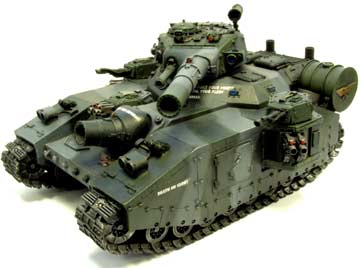
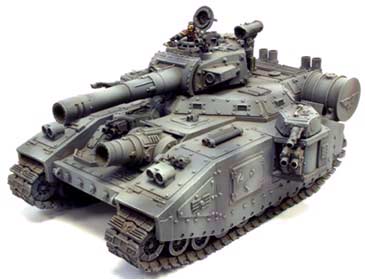
Baneblade

A what?
A Baneblade. This is a tank from the fictional Warhammer 40K Universe. Man does not live on martial arts alone. In case you forgot, I spend some downtime building models and painting them up. While a hardcore, hard charging type would argue this steals valuable training time, I say that even Musashi carved statues of Kwannon, Goddess of Mercy, and painted. I find this activity relaxes and centers me, and acts almost like meditation.

Anyway, the big news in the 40K world is "Apocalypse," a rules supplement allowing for games that would literally take up your living room floor. Hundreds, if not thousands of little toy soldiers on each side are the norm in these games. In this scale game, super-heavy armor comes into play. The Baneblade is the standard super-heavy in the game, and they are releasing an official, plastic model


Shown here are various previous incarnations of the Baneblade.


These are big models.


Megan Fox


How Long to Mastery?

I had the opportunity yesterday to train at a seminar taught by my instructor's teacher, He Who Shall Remain Nameless (HWSRN).

I have a few new readers here since the last time I mentioned HWSRN. Let me assure you that HWSRN is a well-known Bujinkan shihan who has appeared in all the right mainstream martial arts magazines. My posts are suppossed to be about training, not who I do or do not know, and I do not measure my progress simply by who I have or have not trained with.

Anyway, this promised to be a good class as I had the second good fortune to run into one of my old instructors (Let's call him "Rock'n'roll" for his former haircut...) who was willing to work with me for the afternoon.

It didn't take too long working with Rock'n'roll to be reminded of an old martial arts story...
In the story, a young man comes to a new teacher and says that he wants to begin training in martial arts right away. "Certainly," replies the teacher. "How long will it take to master your art?" asks the young man. "Master? Oh, probably ten years," said the teacher.
"Ten years? That's way too long. What if I promise to work twice as hard?" said the young man.
"Oh. If you're willing to work twice as hard than you should master it in twenty years," said the teacher.
And that was my problem. I was trying way too hard. And before you know it, Rock'n'roll was critiquing the same weaknesses in my skill that he critiqued the last time I saw him, three years ago. My angling was off, my kamae was weak, my breathing was bad... It got so bad, I was having trouble executing basic locks and throws.

I'd be lying to say it didn't piss me off. But I can only be made at myself, not Rock'n'roll. Besides, this is why I wanted to train with him -- to test myself and see how I'd progressed.
I left having mixed feelings about my afternoon of training. I've felt like I have put together many pieces of the puzzle in my training this year. I've felt real progress. But I spent last night at home nursing a mildly bruised ego and carefully evaluating my progress, not just in light of one stressful afternoon, but other recent tests.
But that's ok; this is what real training is about. I'll be in class on Monday night.


Sunday, September 16, 2007

Fellow blogger

My research, particularly on knife work, has recently turned to Filipino Martial Arts. I ran across this blog, which seems to have some very interesting information. I wanted to bring it to my reader's attention.